
By Carol Goodman Kaufman / Special to the BJV
An apple a day may keep the doctor away, but bananas can give those round red fruits a run for their money. Bananas are packed with potassium, fiber, and Vitamin B6, as well as antioxidants. They provide both energy and support for heart and digestive health.
Most people consider the banana a fruit that grows on trees, but that description is misleading. Because the banana plant's main stalk (not a trunk, but a pseudostem made of rolled leaves) dies back after fruiting, it is technically an herb. And not just an herb, but the world’s largest herb. It is not a tree. And the fruit itself is classified botanically as a berry. A giant berry, true, but a berry nonetheless.
Given all that background, what is the correct bracha to say when you are about to eat a banana? For that answer, we go back to the 1500s when the renowned Rabbi Joseph Karo explained that since bananas are not a fruit, "Borei Pri Ha'Adamah" (בּוֹרֵא פְּרִי הָאֲדָמָה), meaning "Who creates the fruit of the ground,” should be recited.
Rabbi Karo knew about bananas even though these berries are not mentioned anywhere in the Torah. That’s because they weren’t introduced to the Middle East until around 600 years after the fall of the Second Temple. The banana has its origins in New Guinea. Upon spreading westward toward the Philippines, they hybridized with other subspecies before being brought by Arab traders from Southeast Asia across the Indian Ocean to Africa, the Middle East, and eventually Europe.
Once introduced to the Holy Land, they took root in the subtropical area around the Kinneret. But despite their presence in the region, Israel has only been cultivating them since the 1930s. The intense summer sun with its accompanying dizzying temperatures in the Jordan Valley prompted farmers to use their ingenuity. They erected canvas roofs to the shield the plants and developed advanced irrigation and fertilization methods.
Today, Israelis are among the biggest consumers of bananas, eating over 60 pounds per capita every year. In comparison, we Americans each eat only 27 pounds per year.
I can still remember the first time I visited my cousins at Beit Zera. After getting off the bus on Route 90, my friend and I walked down the drive leading to the kibbutz’s center. Row upon row of banana plants lined the way, emitting a pungent, almost alcoholic odor that assaulted my nostrils. I wondered how anybody could stand the cloying fragrance all day long — in the hot sun, no less.
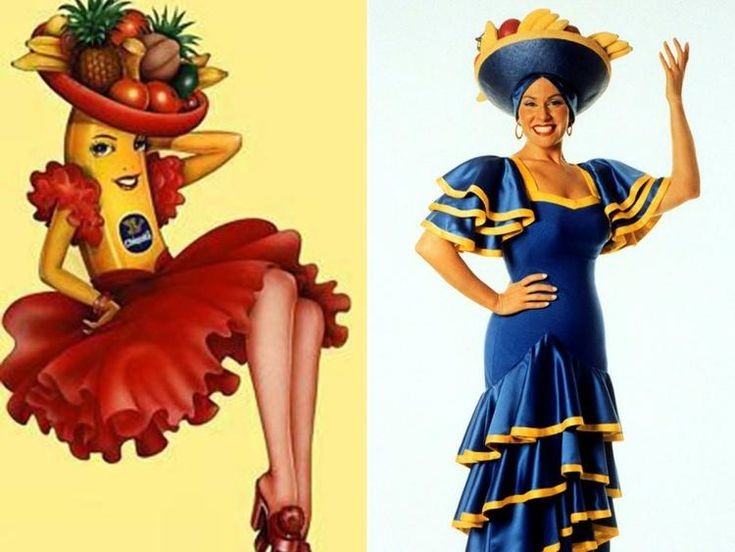
The banana also has an American story with a Jewish twist. Like many an immigrant, Samuel Zmuri (name later changed to Zemurray) came to New York via steerage. One of the many odd jobs he worked to support himself was unloading bananas from ships. In the late 1800s and early 1900s, banana production was just becoming a major industry. If you’ve ever checked the blue labels on the skins of your Chiquitas or Doles, you will know that Central America was and is the source for virtually every banana consumed in this country.
Zemurray was quite the entrepreneur. Unloading heavy bunches of bananas was not his life goal. Instead, he bought up over-ripe bananas and began selling them to grocery stores. Why grocers would want over-ripe bananas is beyond me. I only use them for banana bread. Nevertheless, by 1903 he had started his own company that eventually included his own line of freighters. He became one of the largest importers of bananas to the United States — and a controlling shareholder in United Fruit, which then morphed into United Brands, and ultimately Chiquita Brands.
And the Jewish angle? Zemurray was much more than Sam the Banana Man. A philanthropist and ardent Zionist, he bought for the pre-state Haganah a decommissioned junk ship called the USS President Warfield. Renamed the Exodus, that vessel went on to fame for smuggling Holocaust survivors out of Europe and into Palestine.
Banana Bread
This has been my go-to banana bread for decades. Have all ingredients at room temperature. Set your oven to 350º.
Ingredients:
1¾ cups flour
2¼ teaspoon baking powder
½ teaspoon salt
½ cup oil
2/3 cup sugar
¾ t. grated lemon rind
2 eggs, beaten
1¼ cups over-ripe banana pulp, mashed*
¼ c. chopped dried apricots
¼ c. chocolate chips
Directions:
Sift together the first three ingredients.
Beat until creamy the oil and sugar.
Add the sifted ingredients in about 3 parts to the sugar mixture. Beat the batter after each addition until smooth.
Blend in the next three ingredients.
Fold in the dried apricots and chocolate chips.
Place the batter in a greased bread pan. Bake the bread about 1 hour or until done. Cool before slicing.
*I like to keep over-ripe bananas in the freezer. When I have enough, I simply thaw them out and use those. They’re sweeter and much easier to mash.
Carol Goodman Kaufman, has just published her second mystery book, Crak, Bam, Dead: Mah Jong Mayhem (Next Chapter Press). The collection of cozy mystery short stories features food writer/ aspiring investigative reporter Kiki Coben and her Mah Jong group as they follow clues from a “Black Widow” murder at sea to a suspicious death at a senior home charity event. Armed with a curious mind and her formidable group of friends, Kiki is ready to prove that the only thing you need to catch a killer is persistence – and maybe just a little bit of luck.