
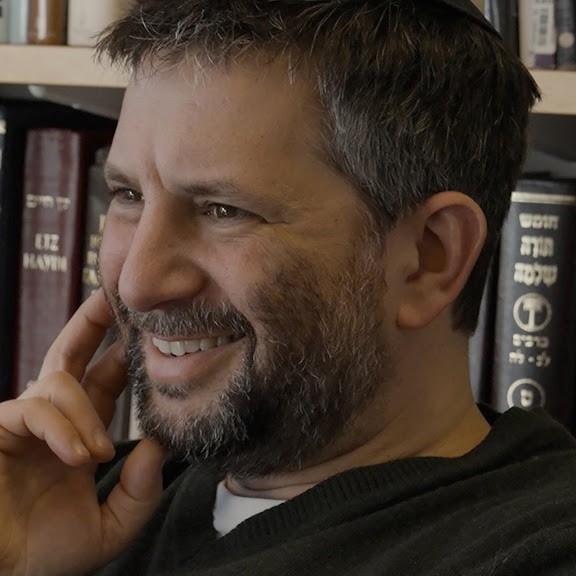
By Rabbi Seth Wax / Williams College
In our day-to-day lives, we spend so much time seeking surety and consistency. We develop and practice routines that are familiar, that create rhythm and shape our experience of regularity. Waking up, washing, drinking coffee or tea, caring for our loved ones, going to work, returning home, resting. Our Jewish calendar, punctuated every seven days by Shabbat, with holidays arriving nearly each month to help us reconnect to our people’s sacred story, reinforces this sense of what we may expect.
And yet, these habits, as important as they are, can blind us to the mystery beyond us. To the numinous and luminous that sits just beyond the edge of our everyday awareness.
There is something mysterious about this time of year, in the late fall and early winter. As the days dramatically shorten and the nights lengthen, we become more attuned to the dark. While I miss the long, warm days of summer, there is a certain quality to this time of year that deeply speaks to me: the growing awareness of all that we cannot see. As the shadows extend ever earlier in the day, I am reminded of how much I do not see, how much I cannot see. It is as if some kind of dark, enveloping cloud extends over parts of our days.
Hanukkah falls during just this time. It falls during the longest nights of the year, leading into the New Moon of the month of Tevet, when the light of the moon diminishes each night before slowly returning. In this way, Hanukkah falls over the darkest nights of the year. Our religious practice during this time entails kindling light – beginning with the first night of Hanukkah, adding an additional flame such that by the end of the holiday, our hanukkiyah is resplendent with light.
However, the lights of the hanukkiyah do not extinguish the dark. How can they? For as much as they shed light, and as much as they anticipate the slow return of the light, as soon as the holiday is over, we find ourselves in the selfsame darkness in which we found ourselves eight nights prior. The lights enchant and enliven us, yet they usher us back to the mystery of the darkness. So what teachings does this mystery offer us?
Noge’a Lo Noge’a, which translates to the English Touching Yet Not Touching: Lessons in the Zohar (Jerusalem: Koren, 2025), is a recently-published collection of the teachings of Rabbi Menachem Froman (1945-2013) on the Zohar, the classic work of Jewish mysticism. Rabbi Froman, the chief rabbi of the town of Tekoa in the West Bank and a prominent peace activist, would host regular study sessions of the Zohar in his home. I was fortunate enough to attend some of these sessions during my year studying in Israel while I was in rabbinical school. The sessions always began in the middle of the night, around 11:30 p.m. And they would go for hours. I remember being mesmerized by the ways in which Rabbi Froman plumbed the depths of the Zoharic texts, inviting participants to sit with the mystery that the text demonstrated and embodied. This was significant because the Zohar is often classified as literature that deals with the sod – the mystery or inner dimension – of Torah.
Shlomo Spivak, the editor of Noge’a Lo Noge’a, offers an overview of some of the key aspects of Rav Froman’s approach to teaching Zohar. He begins by exploring the role of sod, or mystery, and he writes the following:
“What is mystery? Most simply, the definition of mystery is something that you can only talk about to certain people but not to others. But that is not really the case…Mystery is what stands beyond the system…”
In other words, mystery is that which is beyond. It is not something that we can grasp, but rather, something that we can learn and be in relationship with. As to what that means, Spivak continues:
“When a person thinks that he’s grasped something – exactly at that moment, everything turns upside down, and he realizes that he doesn’t understand anything. Why is this important? Because ‘God has chosen to abide in a thick cloud’ (1 Kings 8:12). Something that is important and precious really cannot be revealed to everyone all the time. It cannot be available at all times to human consciousness. Further, someone who invests much in order to arrive at mystery and actually succeeds in arriving at that point needs to remain in the thick cloud. The thick cloud offers protection, not just for the mystery itself but also for the person to whom it is revealed. It is dangerous to enter into the Holy of Holies, and the Torah instructs the high priest who enters there explicitly to do so only when there is a cloud of incense covering everything: ‘For I appear in the cloud over the cover’ (Leviticus 16:2).”
It is so tempting to see things clearly. To know something, to identify it and to define it. And yet, that is not all there is. While living in the light and seeing clearly is critical for life, this time of year reminds us that there is also a time for being present with mystery, with the thick cloud, with darkness. It too has much to teach us about how we live, and how we relate to that which we do not know.
May this season offer each of us the blessings of encountering the mystery that is the dark, and may it accompany us as we slowly return to the light.
Rabbi Seth Wax is College Chaplain and Director of Jewish Life at Williams College.