
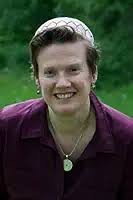
By Rabbi Rachel Barenblat / Congregation Beth Israel of the Berkshires
I always look forward to Chanukah. For me it’s not so much about the presents (though I do have fun looking for little things that might make my teenager smile) but rather the experience of kindling light.
Because I so dearly love the long daylight of summer, I struggle with the brevity (and attenuated quality) of winter daylight. I feel the way I imagine a houseplant might feel, yearning toward the sun and not entirely certain what will nourish me during the winter.
Of course, when we talk about “light in the darkness” we’re not only talking about literal daylight. And the binarism of mapping “light” to good and “dark” to bad can feed a pernicious subconscious racism. So this year I want to ask: what spiritual gifts are available to us in the darkness – both literal and metaphorical?
That’s the question Episcopal priest Barbara Brown Taylor explores in her book Learning to Walk in the Dark. She goes deep into the spiritual valence of darkness and light in our sacred texts, our religious traditions, and our lives. She is clear that in the common antipathy to darkness, we may also be manifesting a discomfort with everything that isn't simple and solar and bright… but a full human life contains both light and darkness. She writes:
The way most people talk about darkness, you would think that it came from a whole different deity, but no. To be human is to live by sunlight and moonlight, with anxiety and delight, admitting limits and transcending them, falling down and rising up. To want a life with only half of these things in it is to want half a life, shutting the other half away where it will not interfere with one's bright fantasies of the way things ought to be.
Her words challenge me not only to embrace the literal darkness of the season, but also to embrace the spiritual “darkness” of difficult times and uncertainty about the future. She writes about the danger of spiritual bypassing, when one uses religion or spiritual life to “paper over” one’s difficult emotions such as anxiety or fear. What are we reluctant to see: in our lives, or in our world, or in ourselves?
We all experience doubt, anxiety, and fear. And for many of us the world feels less safe than it used to. Antisemitism is rising, and even fortifying our synagogues (as Jews everywhere have done) will not bring a promise of complete safety. How do we sit compassionately with our own fear of what might come – honoring the fear and giving it space, but not letting it take over? This too is a kind of walking in the dark.
One of my answers is community. Judaism is a communitarian tradition. Many of our most sacred practices can’t be done alone: think of reading from Torah, or all of the prayers that require a minyan. Judaism reminds us that we need each other to make community. We don’t need to walk in the dark alone. And I think that companionship on the journey can transform our inner experience of being in the dark. It doesn’t take away the obscurity, but it can change how we experience it.
In light of Barbara Brown Taylor’s wisdom, Chanukah is landing differently with me this year.
In mainstream Jewish practice, each night the light increases (setting aside for the moment those who choose to kindle as did Shammai, going from eight lights to one). That theme is echoed in the story we read in Torah at this season: the Joseph novella. Joseph’s name (Yosef) comes from a Hebrew root meaning to add, repeat, or increase.
But increasing light doesn’t have to mean “fighting” or “defeating” the darkness. What if witnessing (and creating) Chanukah’s increasing light could invite us to live into the darkness all the more deeply? As Robert Frost wrote in his poem “Choose something like a star,” “Dark is what brings out your light.”
This year I want to light my chanukiyot with renewed appreciation of the physical darkness that allows us to see the stars – and the times of obscurity when life’s next step might not be clear. Imagine the wisdom we might receive if we can be patient with life’s times of walking in the dark.
Rabbi Rachel Barenblat is the spiritual leader of Congregation Beth Israel of the Berkshires in North Adams.