
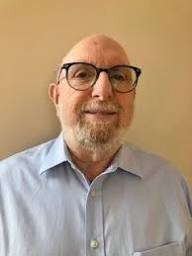
By Rabbi Neal Borovitz / Berkshire Minyan
This issue of the Berkshire Jewish Voice is being published as we begin the countdown to Rosh Hashanah. On July 23rd, we communally commemorated Tisha B’Av, the date according to our tradition that marked the destruction of the First Temple (586 BCE) and the Second Temple (70 CE). Many other Jewish moments of devastation, such as the expulsion of the Jews from England (1290 CE), and the expulsion from Spain (1492 CE). In the 20th century, the outbreak of WWI (1914) and the deportation from the Warsaw Ghetto (1942) have been associated with this date.
The Shabbat that follows Tisha B’Av is called Shabbat Nachamu, the Sabbath of Comfort. The Rabbis, who after the exile that followed the destruction of the Second Temple established the cycle of Haftorah readings, chose selections from the Prophet Isaiah to be read on the seven Sabbaths between Tisha B’Av and Rosh Hashanah. These Haftarot of Consolation, unlike the majority of haftorah selections throughout the year, are not directly connected to the themes of the Torah portions they accompany. Rather, they are a vehicle for t’shuvah in its literal sense, a liturgical vehicle by which we can turn ourselves away from despair toward hope.
This year, in particular, I find this tradition especially salient. The nearly three years since October 7, 2023 have been a time of despair for Jews worldwide. The war, begun by Hamas on that day, has brought death, despair, and devastation to Israelis, Arabs, and Iranians. It has sparked a recurrence of the cancer of antisemitism worldwide, across America, and even here in the Berkshires. Similar to cancers that recur in the human body, the cancer of antisemitism has returned in a more virulent form than I have ever experienced in my 78 years of life.
Rosh Hashanah and Pesach are, for me, the two greatest moments of celebration and times for offering gratitude on the Jewish calendar. In that spirit, I want to pose four questions that each of us individually – and all of us as a community and a people – can ask ourselves over the next six weeks as we prepare ourselves for the awesome task that our rabbis called entitled “Heshbon HaNefesh” – an accounting of the soul.
The four questions I am asking myself this year were inspired by two thoughtful theater productions that I saw here in the Berkshires this summer.
My first three questions arose when I saw the troubling, but challenging play, The Zionists, that was produced by Barrington Stage Company earlier this summer. The playwright based his play upon the conflict playing out in his own family’s divergent positions and opposing actions reflecting their opposing views on their relationships with Israel. As one who defines himself as a Hovevi Tzion, a lover of Zion, The Zionists bothered me deeply because it made me confront the reality that individual Jewish families and The Family of People Israel, writ large, find ourselves, today, torn asunder by the events of these past three years and often incapable of finding a way to compassionately listen to what each other are saying and feeling about Israel.
Differences over Israel’s actions and inactions are not new. The Zionist movement and the Israeli governments over the 78 years since the founding of the State have always reflected divergent views. What is new, and has been intensifying over the last decade in both Israeli society and within the American Jewish community, has been an inability to dialogue respectfully. Similar to the family portrayed on that stage, I believe that too many of us, too often, today allow our passionate opinions regarding Israel’s actions and inactions to consume us, leaving no place or space for compassionate understanding of the voices of others. As the playwright makes us confront, those voices might belong our mothers and our brothers, our fathers and sisters, and our children and grandchildren.
Question One – How can you and I find a way in the year ahead to engage in respectful dialogue with our fellow Jews who hold divergent views on both Israel’s actions and upon our personal relationship with the Jewish state where half of World Jewry resides?
In Tractate Shavuot of the Talmud we are taught: Kol Yisrael Arevim Zeh B’zeh – all Jews are responsible one for the other. Over the ages this teaching has been understood as a two-way street. Every Jew has the right to call upon both the community and individual fellow Jews for help. Conversely the community and each of us has a responsibility to respond to our fellow Jews with the Biblical response first spoken by Abraham, and later Moses, echoed by Jews ever since: Hineni, Here I am!
Question Two – As we prepare for Rosh Hashanah and Yom Kippur this year, I ask you all to join me in taking time in these weeks between Tisha B’Av and Rosh Hashanah to take a personal inventory and ask: How well have we fulfilled our responsibility to give tzedakah, to perform acts of chesed, and work for the wellbeing of our fellow Jews, our fellow Americans, and all humankind?
To me, the greatest tragedy portrayed in The Zionists was the inability of the three siblings to hear the pain and the passion of their family members. While the content of this play focused upon the interrelationship and lack thereof between American Jews and Israel, what evolves throughout the play is the lack of a loving relationship between the siblings. The three grown children are connected to each other through their parents but have no true relationship with each other. They are all incapable of hearing each other’s pain or passion, or of forgiving each other for past transgressions be they accidental or intentional.
The message of Yom Kippur is that before we can ask God for forgiveness and atonement, we must both ask forgiveness from those whom we have wronged or hurt and forgive to all who hurt us.
And so, Question Three – As we approach the Days of Awe, how can each of us and all of us take the Biblical imperative “sh’ma”! – listen – both literally, and more importantly seriously, by really listening to each other and hearing each other’s opinions and pains?
Another Berkshire theater experience I had earlier this summer was attending Berkshire Theater Festival's production of a new play called The American Five, which is based upon the five people, Coretta Scott King, Dr. Martin Luther King, Jr., Bayard Rustin, Clarence Jones, and Stanley Levison – who, along with A. Philip Randolph (who is not portrayed in the play), were the main organizers of the 1963 March on Washington.
In the play, the four African Americans are portrayed as putting their personal lives on the line and thereby changing the course of 400 years of African American history. The one Jewish American character in the play, Stanley Levison, states directly a number of times that he is there to help out of his Jewish responsibility to tikun olam, repair of the world.
I walked out the play feeling that the moment in American history it portrays – and which I remember watching on television as a teenager as it unfolded – was truly a 20th century manifestation of the teaching of Hillel found in Pirke Avot 1:14
If I am not for myself who will be for me!
If I am only for myself What am I
If not now, when !
Question Four for myself and for each of you this year is: How can we as an American Jewish community in the year ahead, while we continue to stand up against antisemitism, also remain strong against the hate which has re-arisen against others here in America?
One final thought for the approaching New Year of 5787 is found in the teaching of Hillel: “That which is hateful to you do not do unto another! That is the essence of Torah! Now go and learn ! (Talmud: Shabbat 31A).
May each of us go forth in the year ahead and truly treat others with the respect and love we desire for ourselves. May we learn to listen to each other with compassion. May we all in the year ahead learn the significance of our communal name Israel, given to Jacob in Genesis 32 and whose etymology means “God Wrestler.” May we then learn from Jacob/ Israel’s encounter with his brother Esau how we can turn confrontation into reconciliation and wrestle together with the questions facing us individually and communally.
Rabbi Neal Borovitz has been an active member of The Berkshire Minyan in Great Barrington for 20 years. He is the Rabbi Emeritus of Kol Dorot, a Reform Jewish community in River Edge, NJ, where he served from 1988 to 2013.